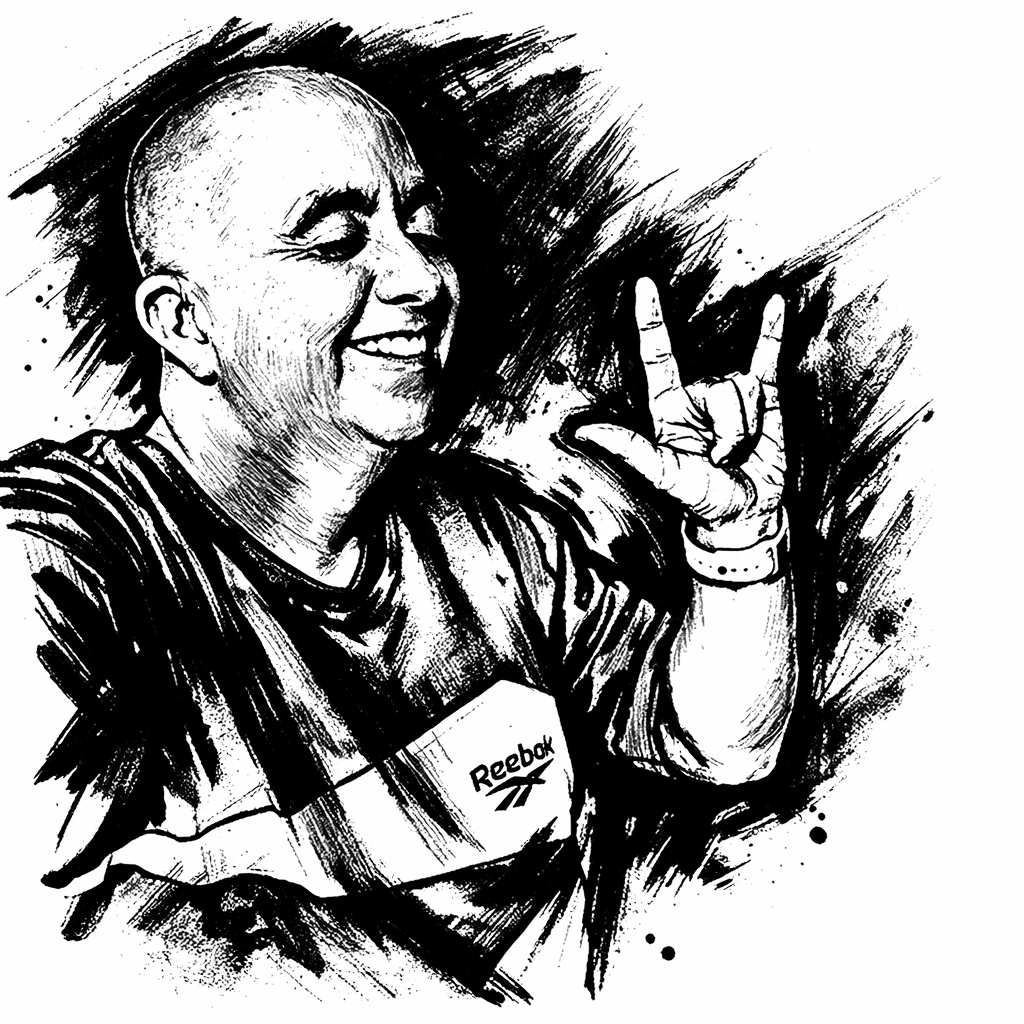
(Inage Description: a black and white digital ink drawing of CJ. They are looking to the right, smiling and signing ILY in ASL)
While making my way through the journey of accepting and managing my Deafblindness, I’ve found myself in several Facebook groups for the Deaf and Hard of Hearing. Frankly, one of the first steps in acceptance is surrounding yourself with people who understand the challenges you face.
These groups have been incredibly helpful. I’ve received support, advice, and encouragement—but I’ve also found myself able to help others in return. What I’ve learned most is just how diverse our community is. Everyone has a different story. Some people were born Deaf or Hard of Hearing, while others lost their hearing later in life. And the reasons for that loss are just as varied as the people themselves.
I’ve shared my story in these groups a few times. But since I keep finding myself telling it again for new members who missed it the first time (which is very easy when a group has 6,000 members), I decided it might be time to share it here as well.
Some of you loyal readers already know parts of this story. But in case you’re new here, I’ll start from the beginning.
Grab your tea and cookies. It’s a long one.
⸻
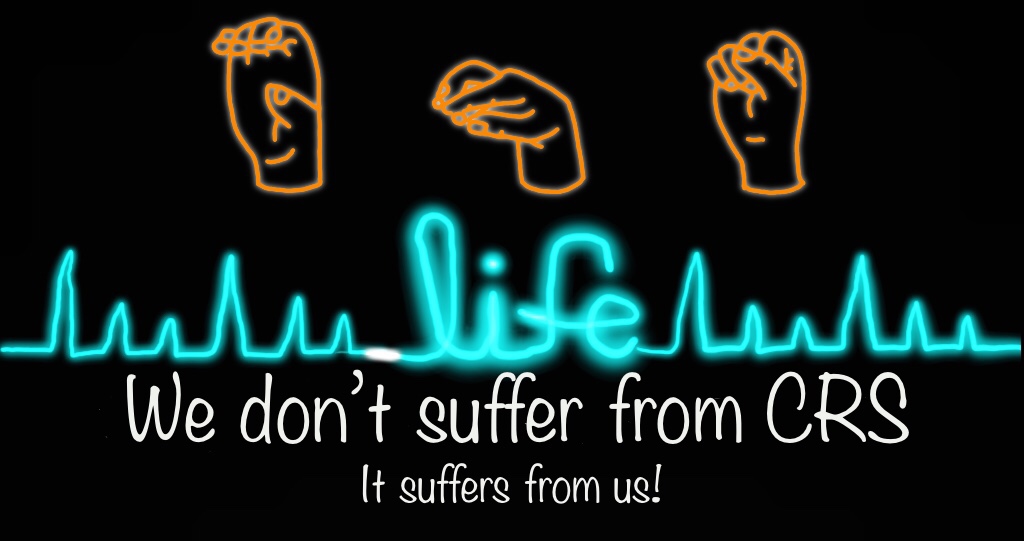
My biological mother contracted Rubella (German measles) during her pregnancy. As a result, I was born with Congenital Rubella Syndrome (CRS). There’s plenty of information about CRS elsewhere on this website, so I won’t turn this blog into a medical lecture.
Growing up, I knew CRS had caused my blindness. I have about 5% remaining vision, and I attended a special school for blind and visually impaired children. An interesting detail, however, is that our school shared a campus with a school for Deaf and Hard of Hearing children.
When I got a little older, I also learned that the Rubella had affected my heart. I had suffered a heart attack at birth and required life-saving surgery shortly afterward.
The third major effect of CRS is hearing loss.
As a child, I didn’t know that.
In fact, I always felt like there was a half-untold story somewhere in my life.
I vaguely remember being about four or five years old and visiting a lady who placed a large headset on my tiny head. She asked me to tell her whenever I heard a beep. The beeps seemed to take forever to arrive, and eventually she removed the headset and we went home. The topic never really came up again.
I also remember a speech and language therapist who came to my house regularly. At the time, I had no idea that was her job. To me she was simply a nice teacher who came over to do arts and crafts and have fun. I enjoyed those visits very much—completely unaware that they served a specific purpose.
⸻
School, however, was hard.
Listening to lessons was exhausting, and my brain often wandered off into its own little universe. Because of that, I was labelled lazy, uncooperative, and someone who simply didn’t pay attention.
Teachers thought it.
Classmates thought it.
Making friends was difficult. I often became the “sheep” who followed along with whatever the other kids wanted, because I believed that was how friendships worked. Thankfully it didn’t land me in serious trouble, but it did lead to a lot of frustration.
And that frustration often turned into anger. Lots of it.
Which, unsurprisingly, didn’t improve people’s opinions of me.
The confusion and loneliness were especially noticeable in the school hallways between lessons. That’s when we would often pass the Deaf students heading to their own classes.
I also travelled to and from school on a bus filled with Deaf children. As a result, I picked up some British Sign Language along the way. I started using it in the hallways between classes and quickly realised I felt like I fitted in better with those kids.
I never really understood why.
Some of them agreed with me. Others didn’t—because the age-old debate of “Deaf vs. Hearing” was very much alive. Older students were firmly rooted in Deaf culture (as they rightly should have been). Younger children were sometimes corrected for using their voices to communicate along with the limited signs I knew.
It created quite a bit of rivalry.
⸻
Eventually I finished school and moved on to college, where the challenges continued.
I struggled with many of the same issues: frustration, exhaustion, and feeling misunderstood. I finished college with zero friends—which was not exactly the ideal graduation gift—but somehow managed to complete my half degrees in psychology and performing arts.
College was difficult, but it was also the point where things started to change.
For the first time, I had access to the internet.
Naturally, I did what any curious student would do: I Googled Congenital Rubella Syndrome.
That’s when I learned most people born with CRS experience three main conditions:
• Vision loss
• A heart condition
• Some degree of hearing loss
Well… two out of three already applied to me.
So I started wondering.
Was I really lazy and inattentive?
Or did I simply have all three symptoms?
At nineteen, however, my confidence was practically nonexistent after everything I’d been through. Instead of approaching my family, I brought the topic to an MSN group for Deaf and Hard of Hearing people.
To my surprise, I was welcomed with open arms.
We spent hours online creating and sharing digital art, chatting about life, and supporting each other. For the first time in a long time, I felt like I belonged somewhere.
And to this day, I’m still in contact with Linda—one of the original admins of that group.
⸻
Around that same time, however, my health took a serious downturn.
It turned out my heart wasn’t the only muscle affected by CRS. My balance deteriorated, walking became painful, and eventually I ended up using a wheelchair. No one could explain why, and pain medication didn’t help much, so a wheelchair became my new normal.
Then, not long after my biological mother passed away, diabetes also decided to move in—another unwelcome gift from CRS.
I was too sick to work but too intelligent to do nothing, so I spent a lot of time online feeding my brain with information.
And that’s where another big change happened.
⸻
In an online chatroom, I met the lady who would later become my adopted sister.
She taught me her language – Dutch, because we had a plan: I would fly to the Netherlands and attend a barbecue with a group of Dutch friends I had met online.
Fun fact: the barbecue never happened.
But I did end up moving to the Netherlands.
After many conversations between families and a mountain of organisation, we decided it would be better for my physical and mental health. My adopted sister (not officially on paper, but very real in every other way) became my caregiver, and her family welcomed me as one of their own.
⸻
It was my Dutch family who helped me climb out of the hole I had fallen into.
We managed to get my diabetes under control fairly quickly. With therapy—lots and lots of therapy—I began rebuilding my confidence and learning how to communicate more effectively.
I was 30 years old when I saw my first ENT specialist in the Netherlands.
He ran tests and confirmed what I had suspected since I was nineteen:
I was Hard of Hearing.
At the time, however, he told me hearing aids wouldn’t help. So life continued as it had before.
Five years later, during a session with my psychologist, the topic of hearing loss came up again. She worked with an organisation that supports blind and visually impaired people.
“If you really do have hearing loss,” she said, “then you would fall under the category Deafblind. That would open the door to different types of support.”
That sentence changed everything.
I started the testing process again.
This time the results were clear: mild hearing loss in my right ear and moderate loss in my left. My left ear qualified for a hearing aid, which I wore for the next five years.
⸻
Later, we finally discovered what had been causing many of the muscle problems.
With some dietary changes, my mobility improved. Not dramatically, but enough for white cane training and a few short walking routes around my village.
That’s when hearing came up again.
With only one hearing aid, I had no directional sound. My orientation and mobility instructor explained that having two hearing aids would make navigation much safer.
After many appointments with audiologists and hearing technicians, I was finally approved for a hearing aid in my right ear as well.
⸻
I’m now in my forties and have been wearing two hearing aids for about six months.
⸻
I still don’t know why my hearing loss wasn’t discussed more openly when I was younger.
We’re talking about the late 80s or early 90s when that headset was placed on my head. Hearing aid technology at the time was mostly reserved for severe or profound deafness. Mild to moderate hearing loss simply wasn’t supported the way it is today.
Less technology often meant less understanding.
Even now, many people believe hearing aids “fix” hearing loss. Anyone who wears them knows that’s not quite true. Back in the 80s and 90s that misconception was even stronger.
“If you can’t fix it, it doesn’t exist.”
And considering I already had several major health challenges, I sometimes wonder if my biological mother simply didn’t want to burden me with another problem—especially one that couldn’t easily be solved.
Technology was limited. Understanding was limited. Support was limited.
The rivalry between the Deaf students and the Blind students who COULD hear, showed how society viewed hearing challenges at the time. It was often treated as something better kept hidden.
⸻
My journey may have been long, but eventually I found the missing piece.
With support from my biological (English) Dad, my Dutch family, therapists, and professionals, I reached a place where I could understand and accept myself.
The road was bumpy, but it made me more resilient and gave me exactly the right amount of stubbornness to advocate for myself.
I am Deafblind, and I’m proud of that.
I am me—and that’s something worth celebrating.
⸻
This story is not the end of my journey with Deafblindness.
Learning about it in your thirties, after unknowingly carrying it your entire life, comes with grief, reflection, and a lot of acceptance work. Over the past two years, I’ve been learning how to advocate for myself and rediscover who I am.
You can read more about that HERE.
Thank you for joining me on my journey. 💛
 CRS Life